-
 IELTS Topic: ENVIRONMENT
Reading 3
Tired of plastic? These businesses have ideas for you
Original source: The Guardian, The New York Times,
Business Wire

Last year Ilana Taub’s startup prevented more than 50 tonnes of apples, bananas, blueberries and raspberries from going to landfill by creating snacks from surplus fruit. But, says the co-founder of Snact, they kept being asked the same question: “why were we selling it in plastic packs?”
The London-based company now has a solution. In partnership with Israeli packaging company Tipa, Snact has launched packaging that takes six months to break down in garden compost. “We have found a way of being disposable without causing environmental damage,” says Taub.
Each year at least 8m tonnes (pdf) of plastic end up in the ocean and it is predicted that by 2050 there will be more plastic than fish in the sea. “It’s crazy, when you think how much plastic has invaded our lives,” says Taub. “It’s easy and [food] safe, but not feasible in the long run. We need to find alternatives.”
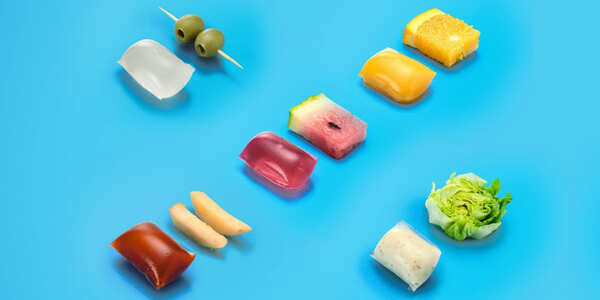
The Ooho sachets by Notpla are colourless, flavourless, heat resistant and edible.
Fellow Londoner, Notpla’s co-founder Pierre Paslier agrees. “We use plastic for five minutes, and it ends up in the ocean for 100 years,” he says. Notpla’s main innovation is a small pouch it calls Ooho, made from seaweed and other plants. This little pod (similar to a detergent pod), which is edible and biodegrades in four to six weeks, is the ideal replacement for single-serving condiment packets.
On a similar innovation path spurred by concern for the oceans is Footprint, a materials science company from Arizona. Company founder Troy Swope describes a trip to Hawaii many years ago where he realised that, because of ocean pollution and climate change, he was going to have to tell his children “what the ocean used to look like”.
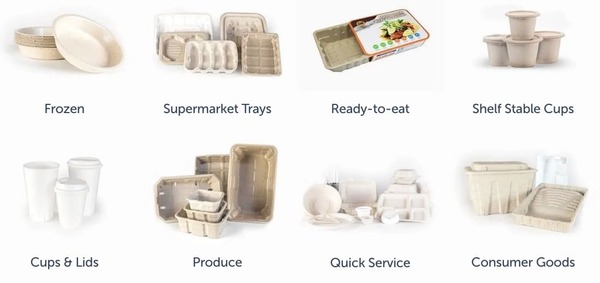
Footprint’s plant-based containers are designed to replace the plastic ones traditionally used by large food manufacturers.
Footprint designs and develops technologies that are made from plant-based, compostable, and recyclable fibres. It is already working with some of the world’s largest consumer packaged goods companies to replace the single- and short-term plastics used in common packaging for items such as frozen and microwavable meals, produce, meat, take-out containers, cups, lids, and straws.
Mr. Swope says that his product is different from other fibre-based alternatives in several ways. The most important are a shelf life comparable to that of plastic, complete biodegradability and, unlike plastic, the ability to be microwaved.