-
 IELTS Topic: ENVIRONMENT
Reading 1
‘Educational’ zoos play an important role in conservation too
Original source: The Guardian

“David Attenborough’s programmes are far more educational than a day trip to a zoo,” says English conservationist Damian Aspinall. And you can see his point. Attenborough’s last series, Seven Worlds, One Planet, was made up of typically stunning material, ideal for getting people hooked on animals.
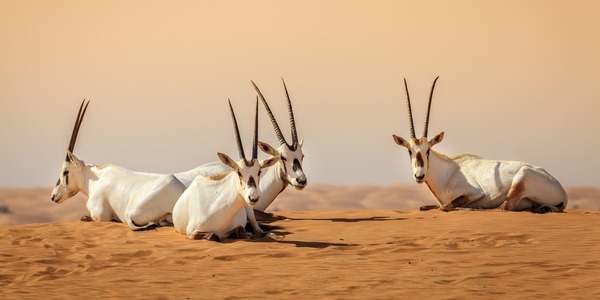
The Arabian oryx was saved from extinction by breeding programs in zoos and then re-introduced to the wild.
Source: Alexey Stiop/ Shutterstock
But the man himself doesn’t agree.
“People ought to be able to see what an animal looks like,” Attenborough told The Observer. “And smells like. And sounds like. I think that is quite important. Actually, very important.”
Education certainly justifies a well-run zoo’s existence, he insists. On the other hand, Attenborough acknowledges that some animals fare better than others in zoos. “Modern aquariums are particularly successful, with their vast ceiling-high tanks in which you can see whole communities of different species of fish living together. They are absolutely fabulous.”
Breeding programs for animals on the verge of extinction and incredibly important
By contrast, polar bears, big raptors and large hunting mammals like lions are not suitable for being kept in zoos, says Attenborough. “I certainly agree with Mr Aspinall in saying you should not have lions in zoos – unless they were becoming endangered in the wild, which, of course is now becoming a real risk.”
And the same goes for conservation, he adds. “Breeding programmes for animals that are on the verge of extinction are of incredible importance. If it was not for zoos, there would be no Arabian oryx left in the world, for example.”
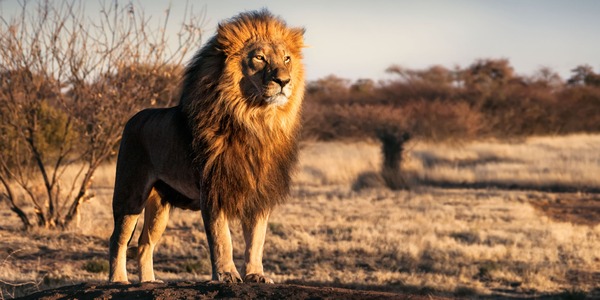
Large hunting animals such as the African lion are not well suited to zoos according to David Attenborough.
Source: 2021 Photography/ Shutterstock
The Arabian oryx was hunted to extinction in the wild by 1972 but was later reintroduced – originally with animals from San Diego safari park – to Oman. Further reintroductions have since taken place in Saudi Arabia and Israel and it is estimated that there are now more than 1,000 Arabian oryx in the wild.
Other zoo-led reintroduction successes have ranged from the spectacular – such as the Californian condor which was restored to the skies above the western US last century, thanks to the release of young birds bred in San Diego – to the minuscule, such as the return of the French Polynesia’s tiny partula snail from populations bred in London, Edinburgh, Chester and Amsterdam zoos.