-
 IELTS Topic: ENVIRONMENT
Reading 2
Time for a new strategy to save the world’s rainforests
Original source: The Guardian

Until a few decades ago, Sumatra’s peaty eastern lowlands were covered with dense natural rainforests. Now the last remaining areas of forest are under intense pressure from expanding oil palm and rubber plantations, logging, mining and plantings of fast-growing trees to supply paper and pulp mills.
Sumatra’s lowland rainforests are among the most biologically diverse on Earth. As they have dwindled in extent, many once widespread animals and plants have become endangered. Sumatran rhinos, tigers and elephants are among them, and so are several primates, including orangutans and gibbons.
The biological importance of these forests has attracted the attention of foreign aid agencies, campaigners and conservationists from around the world. But despite a vast investment of money and effort, the destruction continues.
Environmental groups have had some success with attacks on large companies. One is Indonesia’s Asia Pulp and Paper (APP). With concessions covering about 2.6m hectares across Sumatra and Borneo, APP undertook large-scale forest clearance to make way for plantations to feed its massive pulp mills.
Greenpeace in particular ran a really effective campaign, convincing APP’s major customers, including Disney, Staples, Tesco, Walmart and Nestle, to source their paper needs from other suppliers. The commercial pressure on APP became intense.
So, in February 2013, APP adopted a new Forest Conservation Policy (FCP) to encourage its paper buyers back. Among other things, the FCP promises to end the use of natural forest fibre in paper-making and instead to rely only on wood from plantations.

The Sumatran tiger is one of a number of species that have become endangered due to the logging of Sumatra’s forests.
Source: Petr Krupicka/ Shutterstock
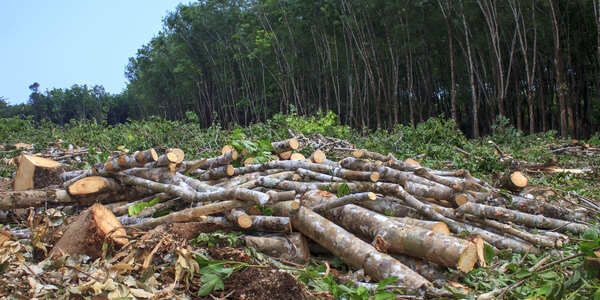
Sumatra’s lowland forests are under intense pressure from expanding palm oil and rubber plantations.
Source: Rich Carey/ Shutterstock
As soon as APP and its suppliers switched off their bulldozers, Greenpeace suspended its campaign and said it would closely monitor progress. There were hopes too that the company’s expensive policy change would pressure competitors, including rival company April, to also adopt a more environmentally-sustainable business model.
… resources are too tight to be wasted on vendettas … better to recognise that …. some companies can be powerful allies
Conservation resources are too tight to be wasted on vendettas against old adversaries. Better to be strategic, address the real priorities and recognise that in the new context some companies can be powerful allies.