-
 IELTS Topic: ENVIRONMENT
Reading 1
We know how to reduce deforestation – so where’s the money?
Original source: The Guardian

For years, some environmentalists and economists have argued that you could pay people to keep their forests standing, maintaining carbon sources and habitat for threatened species. Yet, the idea – known as payments for ecosystem services or PES – has faced critics, who argued it wouldn’t live up to the hype. A new study in Science this week may make them think twice.
“We needed better evidence about how well this approach worked in order to know if we should be scaling it up or rethinking it,” said Seema Jayachandran, lead author and development economist with Northwestern University.
To really test PES, Jayachandran and her team went to the Hoima and Kibaale districts of Uganda – where deforestation for charcoal production is rampant – and randomly sorted 121 villages into two categories: those that would be offered money for not cutting their trees and those who wouldn’t.
In the former, a local organisation – Chimpanzee Sanctuary and Wildlife Conservation Trust – offered a contract to pay local landowners 70,000 Ugandan shillings (about $2.80 in 2012 today) per hectare of forest left uncut annually. Locals could join up or keep cutting.
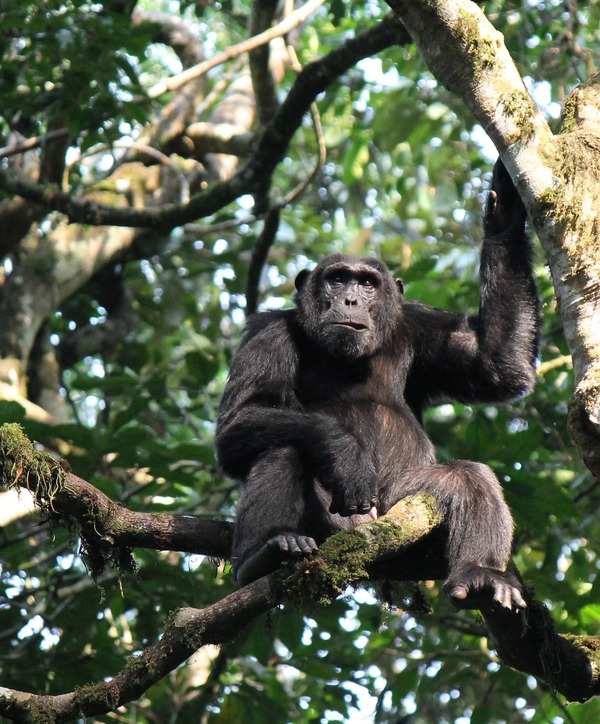
Illegal logging in Uganda’s forests is significantly reducing the populations of chimpanees.
Source: Robin Nieuwenkamp/ Shutterstock
After two years, the team analysed progress. In villages where locals were paid to keep trees standing, the deforestation rate was 4.2%. While this was high, it was nowhere near the rate in those villages that weren’t paid, which saw 9.1% of forest cover destroyed in just two years. Compared to business-as-usual, the PES programme significantly slowed forest loss.
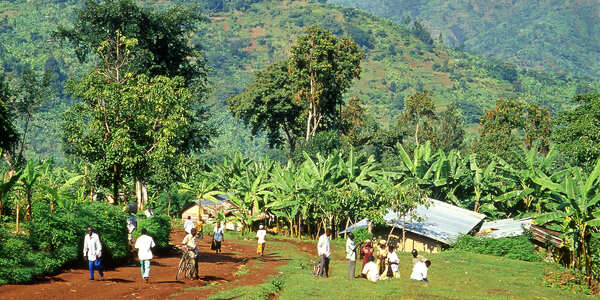
The forests around many Ugandan villages are being cut down to make charcoal.
Source: Pecold/ Shutterstock
“I’m not surprised that the programme reduced deforestation, but I am very surprised by how big the impact was,” said Jayachandran. She expected that the team might find that less deforestation in the selected villages would lead to more deforestation in outlying areas, an economic problem known as “leakage”. But satellite imagery showed no evidence of this.
… where locals were paid to keep trees standing, the deforestation rate … significantly slowed
It is not the first time payments have been made to keep forests from being cut down – it has been done in Costa Rica and Mexico – but it is the first time researchers have set up a real-time field experiment to see if it works.
The results led Jonah Busch, a senior fellow at the Centre for Global Development, to say the “missing piece” in combating global deforestation is not good ideas, but funding from wealthy countries.