-
 IELTS Topic: ENVIRONMENT
Reading 1
Keeping warming to 1.5°C has huge benefits
Original source: The Guardian

What’s the difference between a two-degree world and a 1.5-degree world?
Given we are already at one degree above pre-industrial levels, halting at 1.5°C would look to be at least twice as hard as the two-degree option.
So would it be worth it? And is it even remotely achievable?
First, the gains. According to available research, says Oxford researchers led by Daniel Mitchell, the biggest boost will be reduced probability of extreme and destructive weather events like floods, droughts, storms, and heatwaves.
Take droughts for example, Carl-Friedrich Schleussner of the Potsdam Institute for Climate Impact Research in Germany found that the extra half-degree will halve river flows and dramatically increase the length of dry spells in the Mediterranean, Central America, the Amazon basin, and southern Africa.
The consequences for many will be stark. At two degrees, parts of southwest Asia, including well-populated regions of the Persian Gulf and Yemen, may become literally uninhabitable without permanent air conditioning.
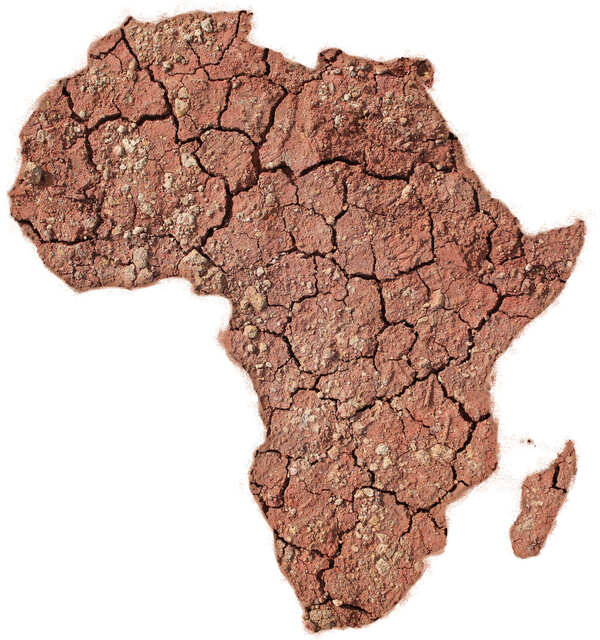
Africa is not the only continent that will experience much more frequent, and extreme, droughts if temperatures rise more than 1.5°C.
Source: Thomas Pajot/Shutterstock
Some researchers predict a massive decline in the viability of food crops critical for human survival. The extra half-degree could cut corn yields in parts of Africa by half, says Bruce Campbell of the International Centre for Tropical Agriculture. Schleussner found that even in the prairies of the US, the risk of poor corn yields would double.
Two degrees, says Johan Rockström, director of the Stockholm Resilience Center, “contains significant risks for societies everywhere”.
Some researchers predict a massive decline in the viability of food crops critical to survival
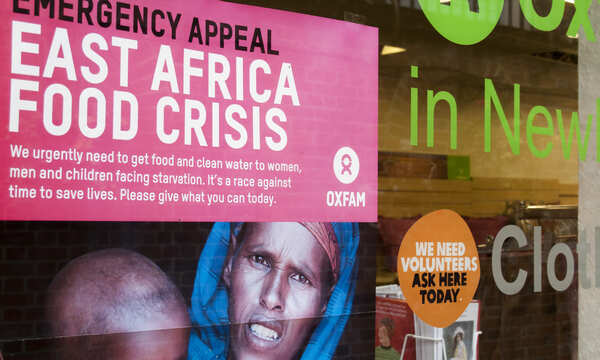
An extra 0.5°C in global warming may halve yields of African corn crops, causing famine for millions of people.
Source: Barry Barnes/ Shutterstock
Ecosystems would feel the difference too. By some estimates, curbing warming at 1.5°C could be sufficient to prevent the formation of an ice-free Arctic in summer, to save the Amazon rainforest, and to prevent the Siberian tundra from melting and releasing planet-warming methane from its frozen depths. It could also save many coastal regions and islands from permanent inundation by rising sea levels.
It looks like 1.5°C matters a great deal. So how hard would it be to keep warming to that level? Total conversion to renewable energy is not enough. Delivering the target by the end of the century will also require drawing down temperatures by using new, and as yet unproven, technologies to extract carbon dioxide from the atmosphere on a large scale.
It’s never to late to do as much as we can; every fraction of a degree matters (Greta Thunberg)
Is it possible? Some think it is. Others think not. But Daniel Mitchell’s Oxford team is certainly not giving into such defeatism, pointing to all the potential positive impacts such a scenario could bring.