-
 IELTS Topic: TRANSPORT
Reading 2
Bikes help empty a city of cars
Original source: The Guardian

Over the past two decades, Copenhagen has experienced a 68% rise in cycle traffic, with 2bn Danish kroner (£240m) invested in bike-friendly infrastructure. In 2016, traffic sensors clocked a new record, with bikes outnumbering cars in the city centre for the first time.
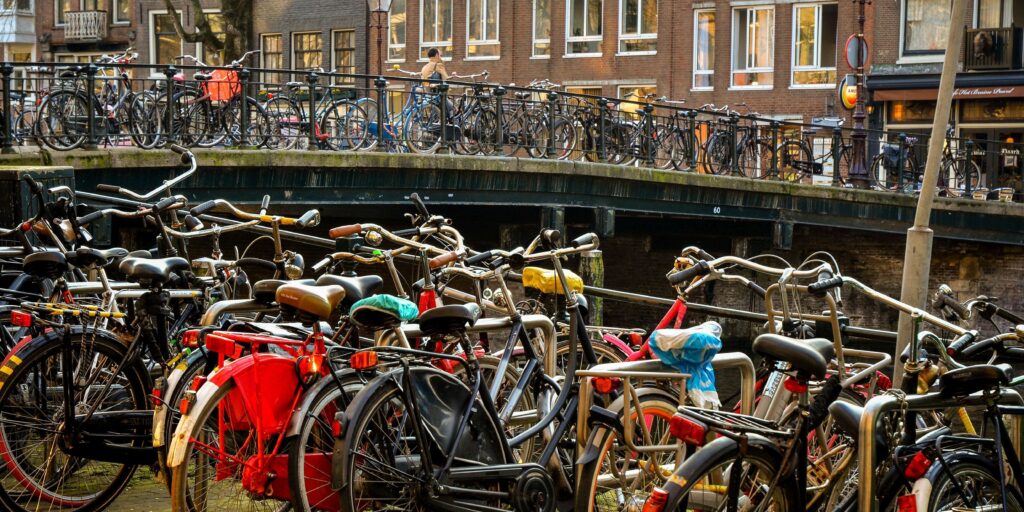
One key way to encourage the use of bicycles instead of cars in a city is to build bike-friendly infrastructure.
Source: Gellert Buzas/Shutterstock
It was well on the way to its 2025 target of having half the population commuting by bike.
But after years on the rise, the proportion of people riding to work or school in the city centre fell slightly in 2017.
Klaus Bondam, the director of the Danish Cyclists’ Federation, blames the fall partly on the sheer number of cyclists jostling for space.
“Crowded lanes give people a lack of security,” he says. “They think, ‘It’s not for me, it’s too wild.’ We need a discussion on how to behave towards one another. If you see kids and seniors cycling – slow down. If you come to a red light, don’t squeeze your way to the front – wait in line.”
… it’s not so good when you have big, broad bike lanes on some streets and really narrow ones on others
While delighted that the bike lanes are widely used, Bondam says the city must do more to tackle bottlenecks. “The jewel of Copenhagen’s bike infrastructure has been that it’s well connected,” he says. “But it’s not so good when you have big broad bike lanes on some streets and really narrow ones on others.
In fact, a recent survey by the city found major stretches of road where space was undemocratically divided between bikes and cars. On Knipplesbro Bridge, for example, bicycles make up 55% of peak traffic, yet are only allocated a third of road space.