-
 IELTS Topic: TRANSPORT
Reading 1
How to boost urban cycling
Original source: The Guardian

Cycling in London is on the rise – up 56% on some routes on the five years to 2019, driven largely by the the construction of some protected cycle lanes in the city centre. There are some additional ways to boost the number of people on bikes.
Make cities bike-friendly
In 1977, Groningen – a small city in the northern Netherlands – underwent a rapid transformation. Provisional signs and barriers were covertly erected to direct cars out of the city centre until they were gradually, over several months, confined to areas outside it.
By selectively reducing the number of city streets available to vehicles, journeys that were once relatively easy by car became arduous and convoluted. Residents chose to cycle instead of drive, even when heading to a big furniture and homewares store such as Ikea – whose specially designed cargo bikes are popular with locals.
The idea applied in a single stroke what transport planning professor Steve Melia calls the three most important principles for increasing urban cycling: separation from motor traffic, consistent design, and making bike journeys quicker and more convenient than car journeys.
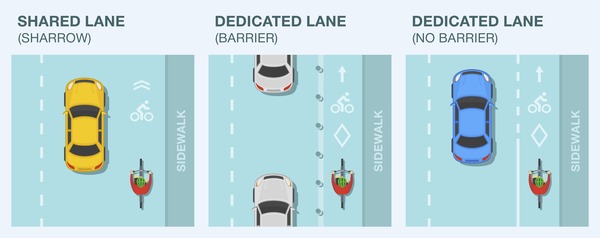
Bike-friendly cities encourage urban cycling by separating cars and bicycles into separate lanes.
Source: Flat vectors/Shutterstock
30kph zones
Excluding cars entirely isn’t always practical – and can make life difficult for disabled people, as well as preventing access for ambulances, fire services and delivery lorries.
Slowing cars down makes city centres more hospitable to cyclists. But does putting up 30kph speed signs actually have an effect?
Evidence from the British cities of Portsmouth (where the speed limit was reduced on around 94% of roads) and Bristol (where it was introduced on several main routes) suggests that they increase road safety and lead to more people walking and cycling.
Reduced speed limits increase road safety and lead to more people walking & cycling
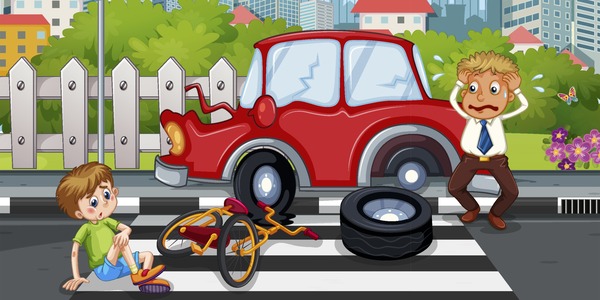
In the Netherlands, car drivers are automatically at fault if they hit a cyclist and are liable for damages.
Source: GraphicsRF.com/ Shutterstock
Strict liability
What if legislation alone could encourage more people to cycle?
In the Netherlands, liability is automatically placed with the more powerful road user, unless it can be proven they were not at fault. The law is designed to protect vulnerable road users from financial damage caused by drivers of motorised vehicles. Unlike in the UK, a motorist who hits a cyclist in the Netherlands must prove they were doing everything they could to avoid contact – otherwise they will be liable for damages.
Supporters say stacking the law in this way would encourage people to drive more carefully.