-
 IELTS Topic: TRANSPORT
Reading 1
Rising fuel prices cut congestion
Original source: The New York Times

In 2008, New York petrol prices rose to $4 per gallon (compared to $2.60 in late 2020). William Neuman noted at the time that it had a chilling effect on traffic volumes.
Soaring gas prices and higher tolls seem to be doing for traffic in New York what Mayor Michael R. Bloomberg’s ambitious congestion pricing was supposed to do: reducing the number of cars clogging the city’s streets and pushing more people to use public transport.
In May, with petrol at more than $4 a gallon, traffic at the Metropolitan Transportation Authority’s bridges and tunnels dropped 4.7 percent compared with the same month the previous year.
Preliminary data for June shows a similar decrease in traffic, and officials say the change is largely because of higher prices at the pump.
At the same time, subway, bus and commuter rail ridership has increased.
“We’re at the point where people really are changing habits,” said Sam Schwartz, a transportation consultant. He said that if fuel prices stayed high, the result could be close to the goal set by Mr. Bloomberg’s congestion pricing plan, which, if it had been approved, was expected to reduce traffic in much of Manhattan by 6.3 percent.
“If we start eclipsing $5 a gallon, which we might over the summer, I think we might get very close,” Mr. Schwartz said.
Throughout the country, rising fuel prices have had a broad economic impact, hitting especially hard in many cities and suburban communities where people are highly dependent on cars.
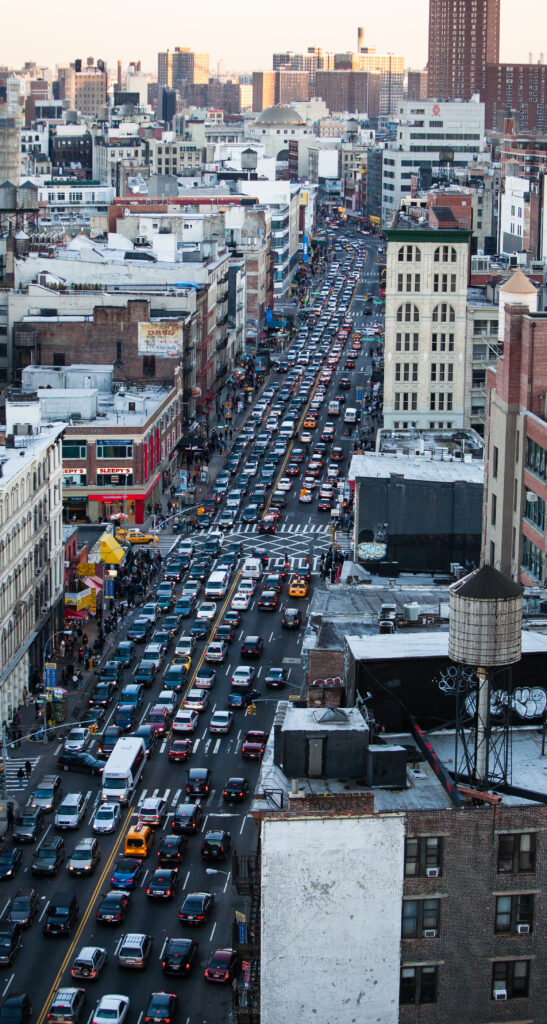
New York’s streets are traditionally clogged with traffic but increased petrol prices in 2008 did reduce congestion.
Source: DanielW/Shutterstock
And while there is no denying that increased costs mean pain for drivers in New York, they may also have the unique effect of meshing with the city’s goal of cutting traffic and, as a consequence, lowering pollution.
Bloomberg administration officials, however, said the actual impact may be slight.
“The effect here is by no means comparable that congestion pricing would have in reducing traffic,” said Bruce Schaller, deputy transportation commissioner for planning and sustainability.
Congestion pricing reduces traffic at the most congested places & times whereas fuel prices spread the impact out everywhere
“What congestion pricing does,” he added, “is reduces traffic traffic at the most congested places and times, whereas fuel prices spread the impact out everywhere.”
Still, the new numbers do bolster a central point of the Bloomberg plan: that higher prices can motivate commuters to give up their cars.
“It shows that pricing matters and that people respond to it,” said Jeffrey M. Zupan, a senior fellow for transportation at the Regional Plan Association.