-
 IELTS Topic: FAMILY
Reading 2
Spanking by loving parents is OK
Original source: The New York Times

The University of California’s Dr. Baumrind, a psychologist known for her classic studies of authoritative, authoritarian and permissive styles of child-rearing, argues that an occasional spanking, when delivered in the context of good child-rearing, does not do any harm.
Dr. Baumrind says her own research, an analysis of data from a long-term study of more than 100 families, shows that mild to moderate spanking had no detrimental effects. Providing that parents who delivered severe punishment – for example, frequently spanking with a paddle or striking a child in the face – were removed from the analysis, Dr. Baumrind and her colleague, Dr. Elizabeth Owens, found that few harmful effects linked with spanking were left. And the few that remained could be explained by other aspects of the parent-child relationship.
”When parents are loving and firm and communicate well with the child,” Dr. Baumrind says, ”the children are exceptionally competent and well adjusted, whether or not their parents spanked them as preschoolers.”
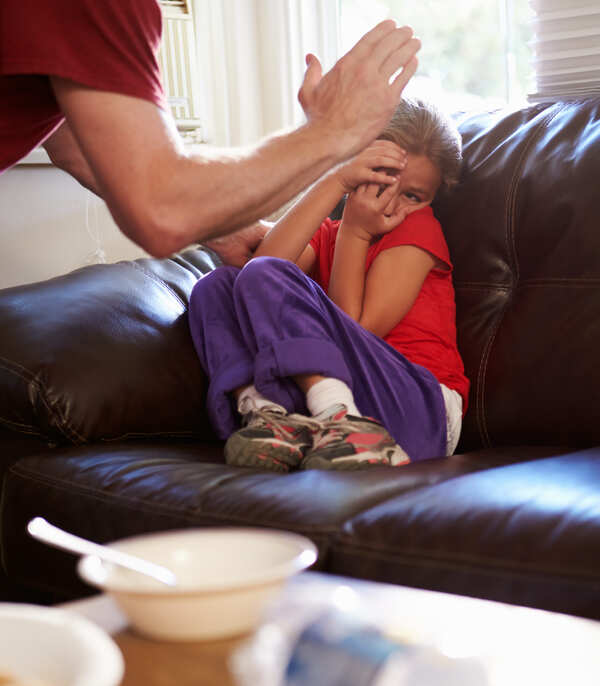
Mild to moderate spanking by firm and loving parents has no detrimental effects.
Source: Shutterstock
The study drew upon data from the Family Socialization and Developmental Competence Project, which followed families in the Berkeley, Calif., area over 12 years, from the time their children were preschoolers until they were adolescents.
Dr. Baumrind argues that, without compelling evidence that spanking is harmful, parents should be free to rear their children in accordance with their own values and traditions.
A majority of American adults still endorse spanking as a disciplinary tool, though that number has dropped over the last three decades. And a 1999 study found that 94 percent of 3- and 4-year-olds in the United States had been spanked at least once by a parent in the last year.
In deciding how to discipline their children, many parents say they rely on their pediatricians’ advice, the model provided by their own parents, their religious beliefs or their own experience of what works.
Michael Shannon, 47, of Clemmons, N.C., for example, says he and his wife decided years ago to spank their three children, now 15, 20 and 22, because they found that timeouts did not always work when the children were small.
My parents weren’t strict … but I knew where the line was straight away
”It seemed to get our child’s attention a lot quicker,” Mr. Shannon said.
He said he had been spanked with a paddle by his own father and did not believe it had negative effects.
”My parents weren’t strict,” Mr. Shannon said, ”But I knew where the line was right away.”