-
 IELTS Topic: SPORTS
Reading 3
Mind over matter: mental strength a winner
Original source: The Guardian

Rafael Nadal – mental giant with a brutal forehand
There are many images that stand out with Rafael Nadal. But one thing sticks in the mind above all: his attitude. There has never been a moment when you could say Nadal has not given everything he had to try to win.
Carlos Moya, the former world No 1, a long-time friend and now his coach, first met him when Nadal was 12. “I could see, by the sheer intensity with which he trained, that he was super-ambitious and desperate to improve,” Moya said in Nadal’s book, Rafa. “He hit every shot as if his life depended on it. I’ve never seen anything like it, not even close.”
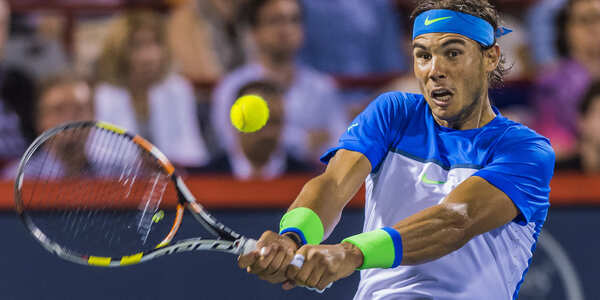
Rafael Nadal combines brutal shot-making with a laser-like focus and intensity. pdrocha/ Shutterstock
The intensity. The concentration. The focus. The belief. From the moment he broke through in 2003, Nadal’s laser-like focus and ability to dig deeper than most was obvious, as big a weapon as his forehand, which itself is one of the most devastating shots in tennis history, a shot Andre Agassi described as “just brutal”.
… his coach … pushed him to extremes in training as a child, building up mental strength through adversity
It was Toni Nadal, his coach and uncle, who pushed him to extremes in training as a child, building up mental strength through adversity. “He always stressed the importance of endurance,” Nadal said of Toni in his autobiography, Rafa: My Story. “Endure, put up with whatever comes your way, learn to overcome weakness and pain, push yourself to breaking point but never cave in. If you don’t learn that lesson, you’ll never succeed as an elite athlete.
“That is what he taught me.”
Using the brain to boost performance
Mental preparation coach Midgie Thompson says triathletes can put their grey matter to good use
Can working on the mental side really make someone a better triathlete?
Sure. If you feel weak, tired or negative in a race, you won’t feel as good as if you’re confident and focused. To give you an example, last year at the World Triathlon Championships I was chatting to an elite British athlete. “The swim is going to kill me,” she said. “I’m not looking forward to it. I’m going to get beat up.” Her language was very negative.
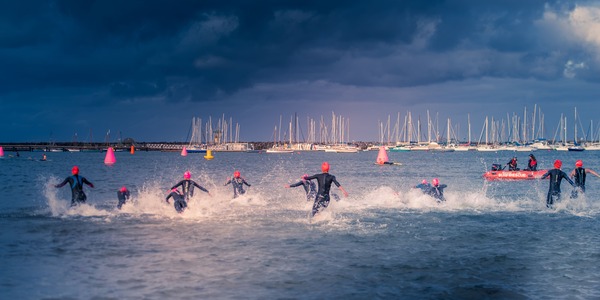
Many triathlestes worry about the swim. But by visualising a good technique and feeling, they can become calm and do much better than they expected. Alex Bogatyrev/ Shutterstock
I set about changing it by getting her to visualise that the swim would feel easy and that she was gliding through the water and overtaking her rivals. I also worked on making her calm and focused.
The next day she placed much better than she’d expected out of the water. “When I got in the water I felt it was effortless – you made me have a better swim,” she said. “No, you did it,” I told her, “because you changed the language in your mind.”
But there’s a big difference between an elite athlete and an ordinary one …
True, but the techniques to improve are the same. Peak performance is about three things: physical excellence, technical ability, and mental focus – many athletes spend money on equipment or a coach to get an extra edge and think nothing of it. But they often omit the mental side. That’s a mistake.