-
 IELTS Topic: SPORTS
Reading 1
Higher, faster, stronger, better
Original source: The Guardian

There are a handful of numbers that are imbued with meaning. Roger Bannister’s 3:59.4. Usain Bolt’s 9.58. And now Eliud Kipchoge’s 1:59:40.
Kipchoge’s extraordinary sub-two-hour marathon in Vienna on Saturday is one of the greatest sporting achievements – recording a time that has never been achieved before and pushing the limits of human ability, again. It is a time on the fringes of what scientists believe is humanly possible.
“It is a great feeling to make history in sport after Sir Roger Bannister in 1954,” Kipchoge said afterwards, predicting that others would repeat the feat. “I am the happiest man in the world to be the first human to run under two hours and I can tell people that no human is limited.”
Is he right? Where are the limits of human ability? And how close are we to reaching them?
Raph Brandon, head of science for England cricket, distinguishes between feats which are constrained by human anatomy, and those which require human determination or skill.
“When Bolt ran 9.58 in Berlin 10 years ago, if you analyse the split times, it’s very hard to imagine where the improvement comes from,” said Brandon, who worked with Team GB through three Olympic games until 2014. “The two hour marathon is in the same category.”
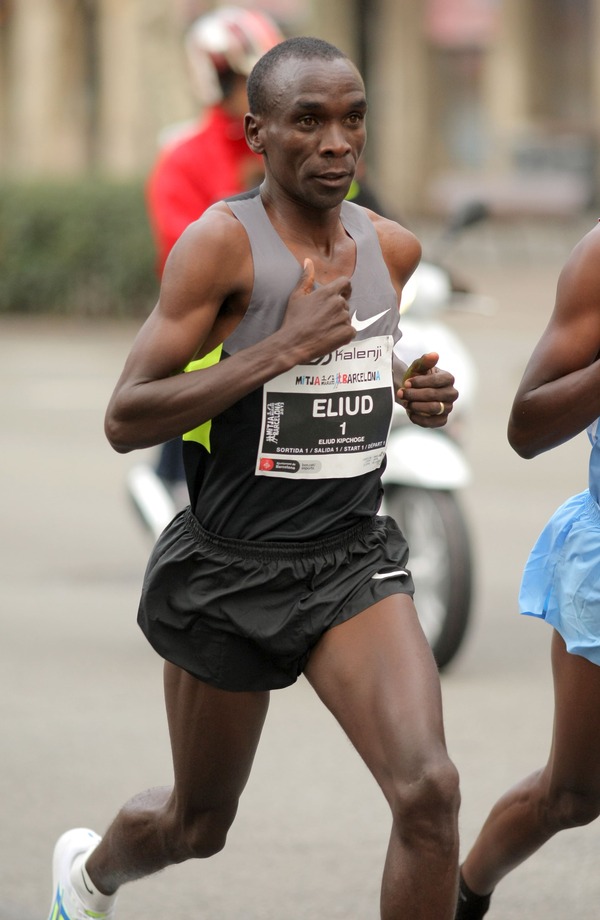
Eliud Kipoche has run a marathon in under two hours. Until he did, it was believed not to be humanly possible.
Source: Maxisport/Shutterstock
(Sports scientists) distinguish between feats constrained by human anatomy and those which require human determination or skill
Multi-day, ultra-endurance events, such as [Sarah] Thomas’s cross-Channel swim (a 215 kilometre ocean swim in 54 hours), are different, Brandon said.
“They need grit, psychology and bloody-mindedness to go that little bit further. Those people will continue to do unique things because you’re not really taking the body to its anatomical limit; it’s more a question of how much you’re prepared to deplete and fatigue yourself.”
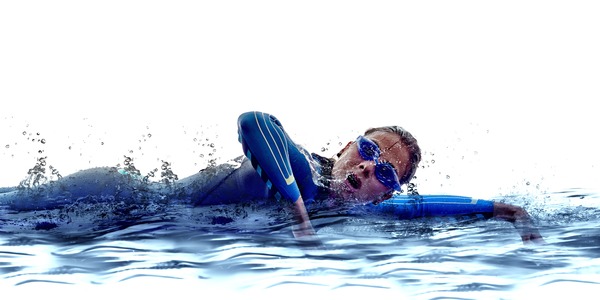
Open ocean swims of hundreds of kilometres require extraordinary amounts of perserverance over a number of days.
Source: Franck Camhi/Shutterstock
And there’s a third category, those sporting endeavours that rely on hand-eye coordination: the goal tallies of Cristiano Ronaldo and Lionel Messi, the tennis grand slams of Roger Federer and Serena Williams, and the batting of Virat Kohli, Steve Smith or Don Bradman, who trained by hitting a golf ball with a stump against a wall to become the best batsman ever to play Test cricket.
… there’s a third category … that relies on hand-eye coordination
“You’ve got to put the right kind of hours in,” Brandon said. “Bradman’s [golf ball is] a nice example. It’s something that overloads your perception and movement control so you can cope with more and more types of delivery bowler and pitch condition. But there are physiological limits to that as well.”