
Reading 2
Tackling the young’s disillusionment with the news
Original source: The New York Times

The students sit at desks in groups of four, watching videos about the recent bush fires in Australia. One shows an apocalyptic landscape in flames, the other a tourist paradise, with assurances that much of the continent is safe.
Instead of dismissing both as fake news, the eighth graders know what questions to ask to tease out the nuances: Who put out the videos? What does each source have to gain? How big is Australia? Could both videos be true?

Few children know the right questions to ask to distinguish fake news from real news. So they often avoid news altogether.
Source: MichaelJayBerlin/ Shutterstock
It is no wonder these Brooklyn students approach their task with such sophistication. They have been studying news literacy since sixth grade in one of the only schools in the US to make the subject part of an English language arts curriculum that all students must take for an hour a week for three years.
News, or media, literacy — how to critically understand, analyze and evaluate online content, images and stories — is not new. But it has taken on urgency in the last few years as accusations of fake news and the reality of disinformation permeate the internet and people — especially young ones — spend hours and hours a day looking at screens.
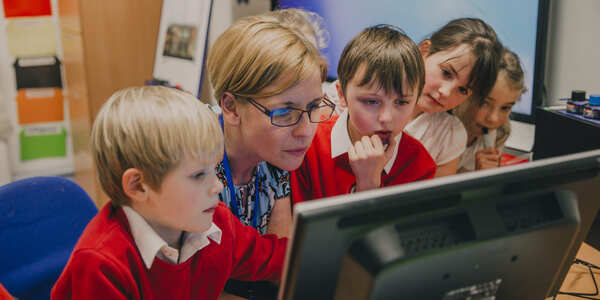
Unfortunately, only a few schools teach their students to critically undestand and analyze online stories.
Source: DGLImages/ Shutterstock
“Media literacy is the literacy of the 21st century,” said a recent report by the group Media Literacy Now.
Research has shown that an inability to judge content leads to two equally unfortunate outcomes: People believe everything that suits their preconceived notions, or they cynically disbelieve everything. Either way leads to a polarized and disengaged community.
Other recent research suggests that while so-called digital natives — preteens and teenagers — are technically savvy, most of them fail when it comes to assessing the truthfulness of news articles and images.
“If they were on a highway, it would be equivalent to not knowing you should stop at a stop sign. That’s really the state of ignorance we’re dealing with,” said Sam Wineburg, a professor of education at Stanford.
Maria Carnesi, a social studies teacher, says students are very disillusioned by news. “Everything is fake news. News literacy, on the other hand, is very empowering for young people.”

Most young people are not able to assess the truthfulness of news articles and images.
Source: Shutterstock
So, when the opportunity arose, her Long Island school had little hesitation signing up to a program developed by Stony Brook University’s Center for News Literacy. Its virtual classroom, Checkology, offers 13 online interactive lessons that teachers can use.
The students are fast learners. “My mom doesn’t watch the news all that much, but sometimes she’ll read something, and she’ll automatically believe it and tell me about it,” says Nafisa Patwary, a seventh grader. “And I’ll help her fact check.”